
The vast majority of Gold Coasters support the Oceanway. They understand the enormous benefits of a continuous beachfront path and want to see the remaining missing links completed.
The Mermaid Beach section is the most contested — and it is the section with the greatest opportunity to improve public safety, provide equitable access to the beach and deliver a lasting benefit to the community.
For Friends of the Oceanway, that is why it deserves the highest priority for construction.
ADDRESSING OPPONENT CONCERNS
Opposition to the Mermaid beachfront Oceanway is relatively small but strongly expressed. Some owners of the 170 or so beachfront properties understandably want to protect their privacy and amenity. Other people object to any intervention in the dunes on environmental grounds. They share a preference for the path to be routed along Hedges and Albatross Avenues instead of the beachfront.
Residential impact and environmental concerns deserve to be taken seriously. They should also be considered alongside the very substantial public benefits of a continuous Oceanway — and against practical evidence about how the beachfront path can be designed, built and managed.
Privacy and amenity

The privacy and amenity of beachfront residents need not be diminished by a beachfront Oceanway.
Thoughtful landscape design, planting, fencing, screening and carefully controlled lighting can provide appropriate separation between private properties and the public path. Good design can achieve both objectives: protecting residential amenity while providing the community with safe, continuous access to its beachfront.
Beach protection
Everyone agrees that protecting and restoring the Gold Coast's beaches is important. If we could turn back the clock to the 1940s, before residential development began at Mermaid Beach, it would have been sensible avoid building on sand dunes and to retain an esplanade between these and houses. But those decisions were made generations ago. The challenge today is to make the best possible use of the landscape and public land we have inherited.
What about the impact of a path on dunes?
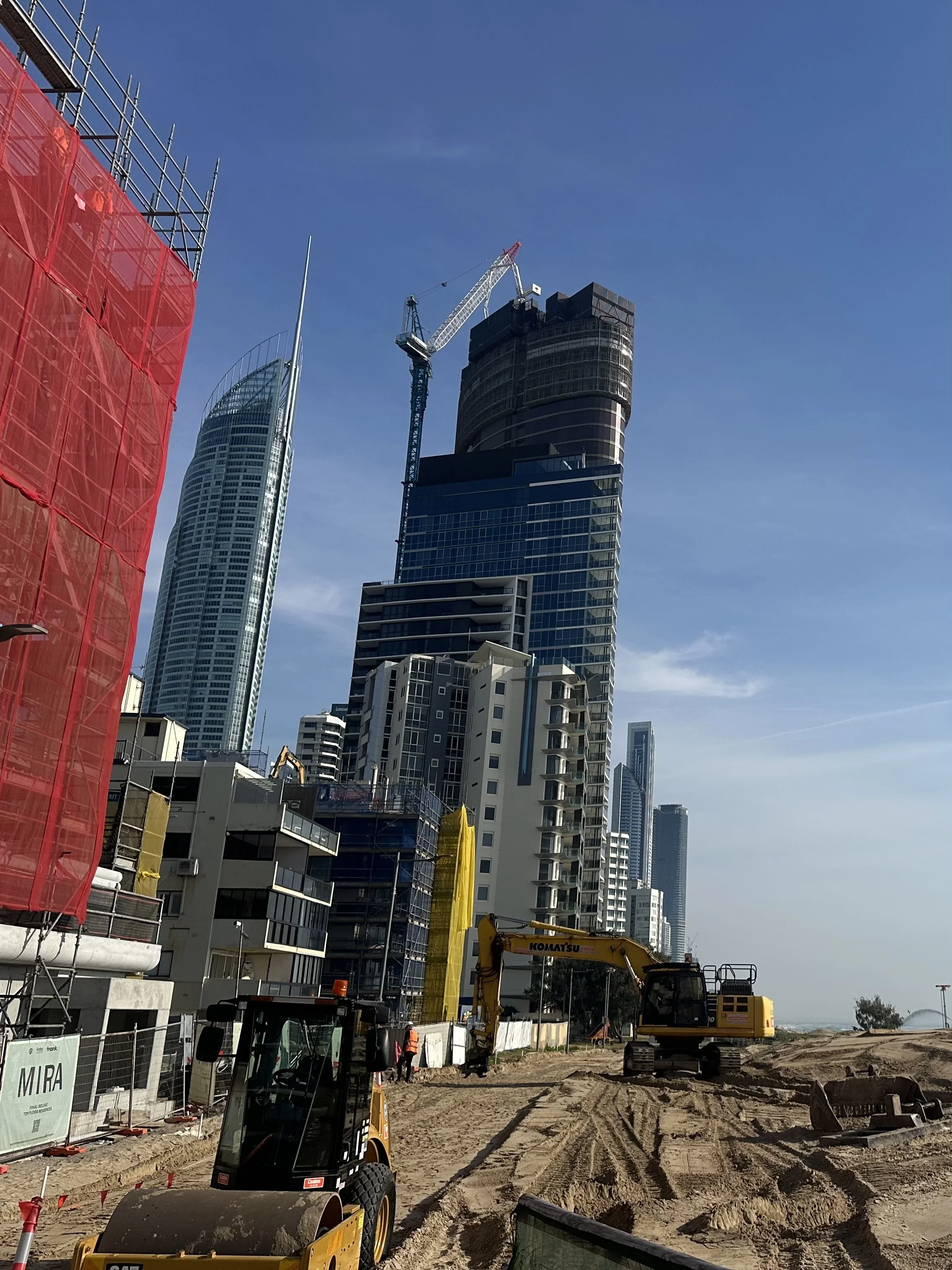
Building the Oceanway does not mean abandoning dune protection. The council has conventionally constructed paths as a floating ribbon of concrete, generally around 100–125mm thick and intentionally designed to be sacrificial in the event of major coastal erosion. If cyclonic waves reach the path, sections can break apart rather than become large chunks that become hazards or pound the dunes and exacerbate erosion.
This simple, cost-effective form of path also allows for progressive construction of foreshore rock walls. As we have seen numerous times along the Surfers South and Tugun to Bilinga sections of the Oceanway which similarly have beachfront housing, the concrete Oceanway path can be temporarily dug up and then replaced as foreshore rock walls are fortified or constructed in conjunction with redevelopments.
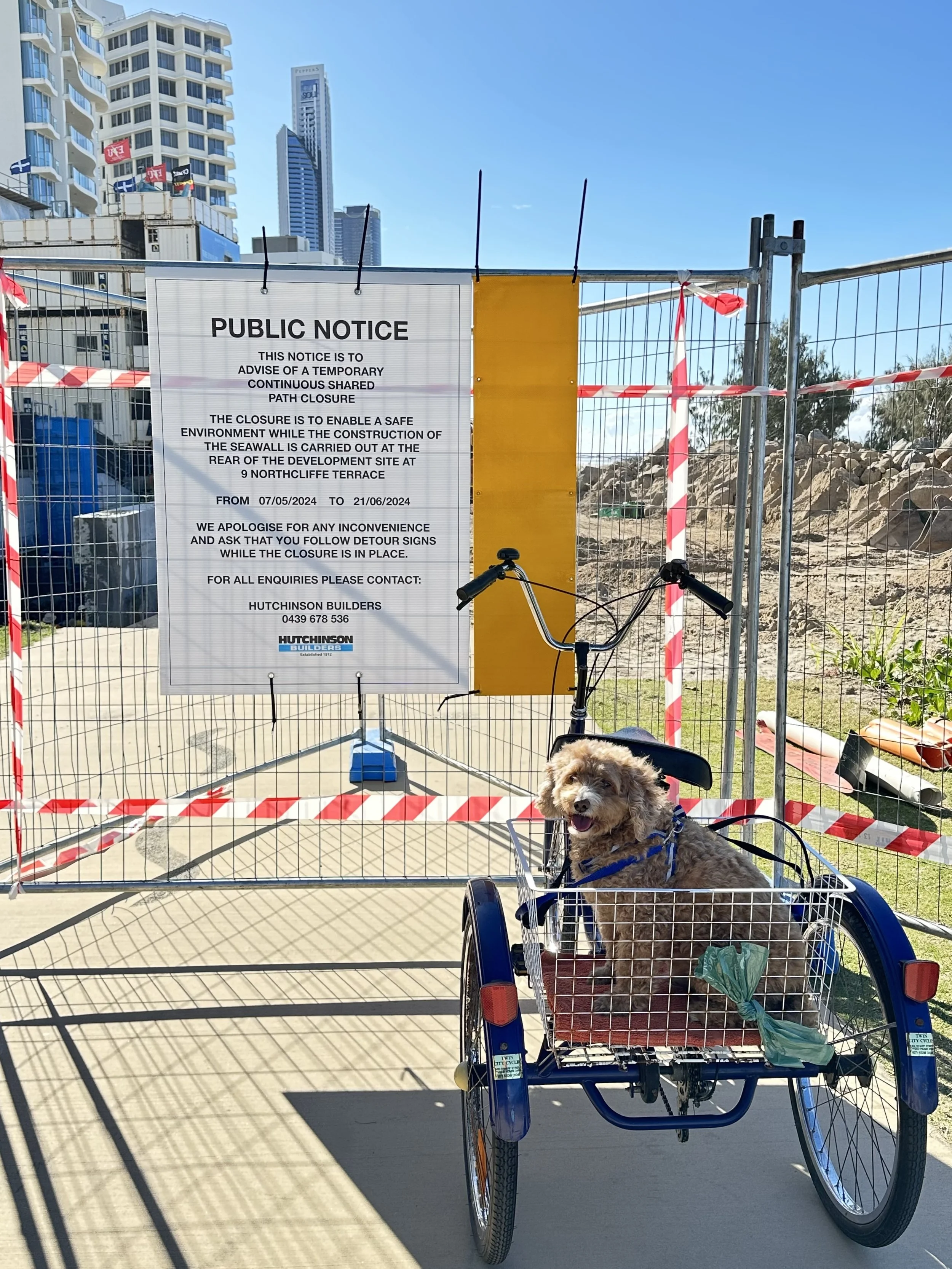
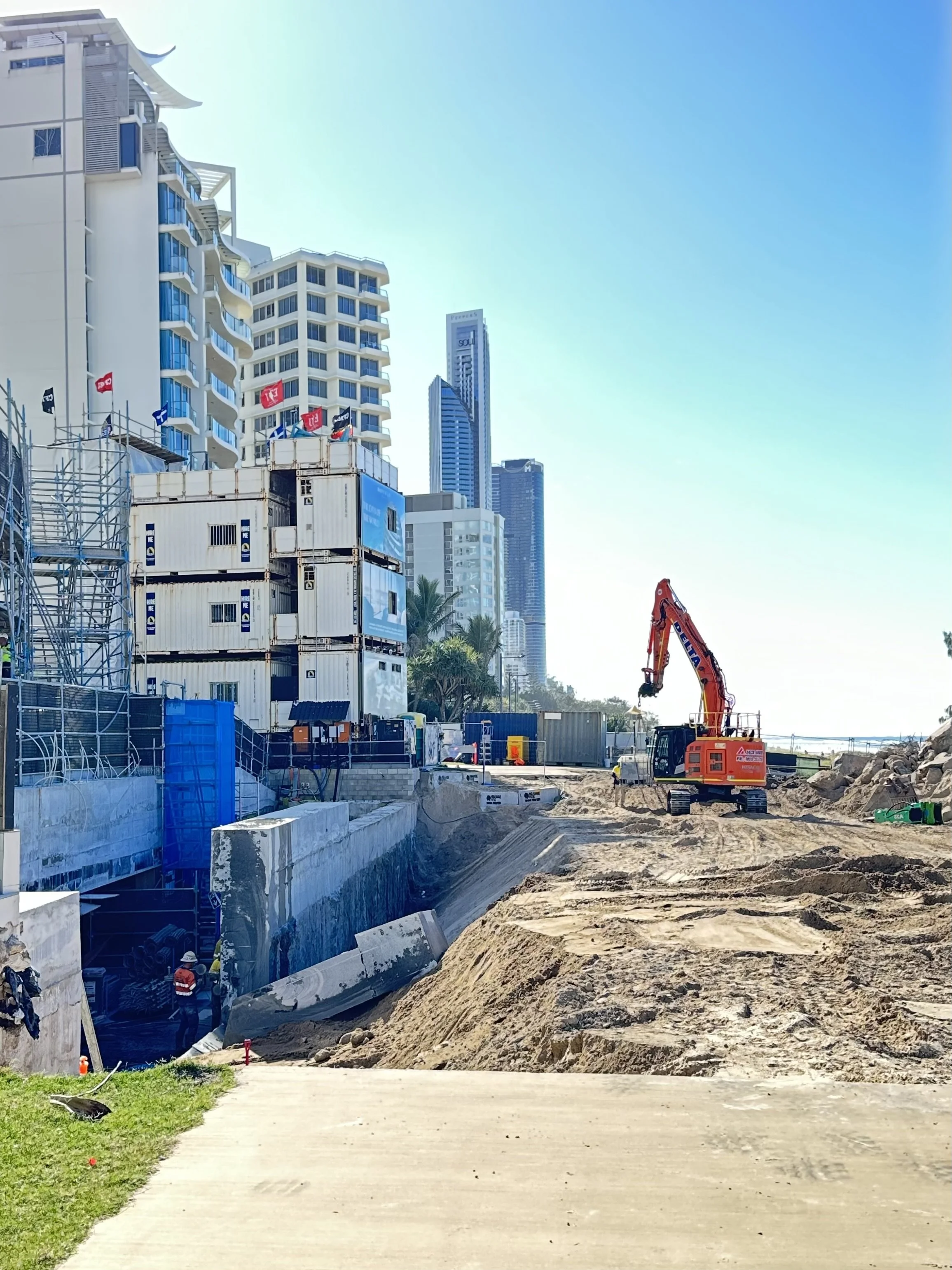
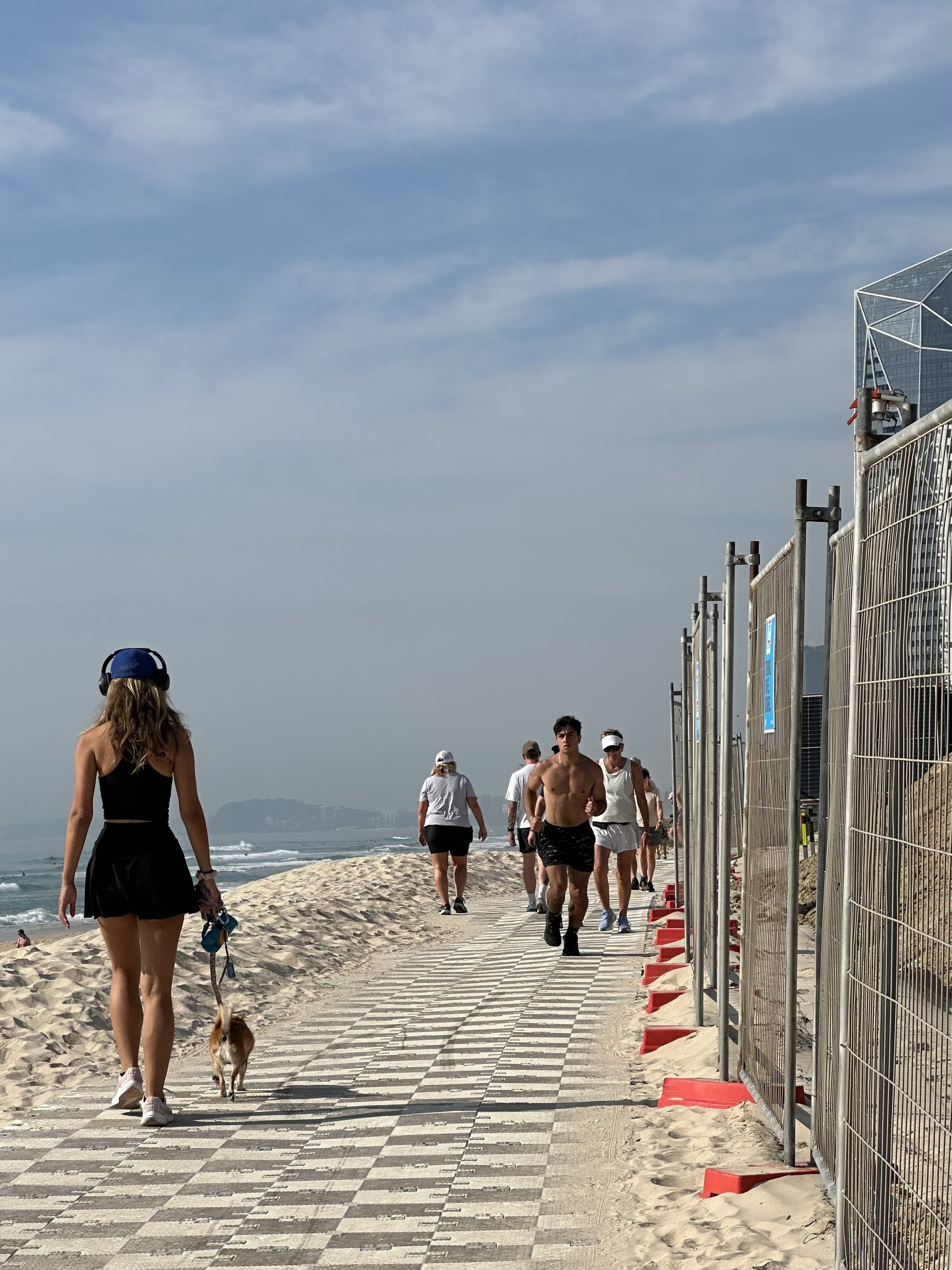
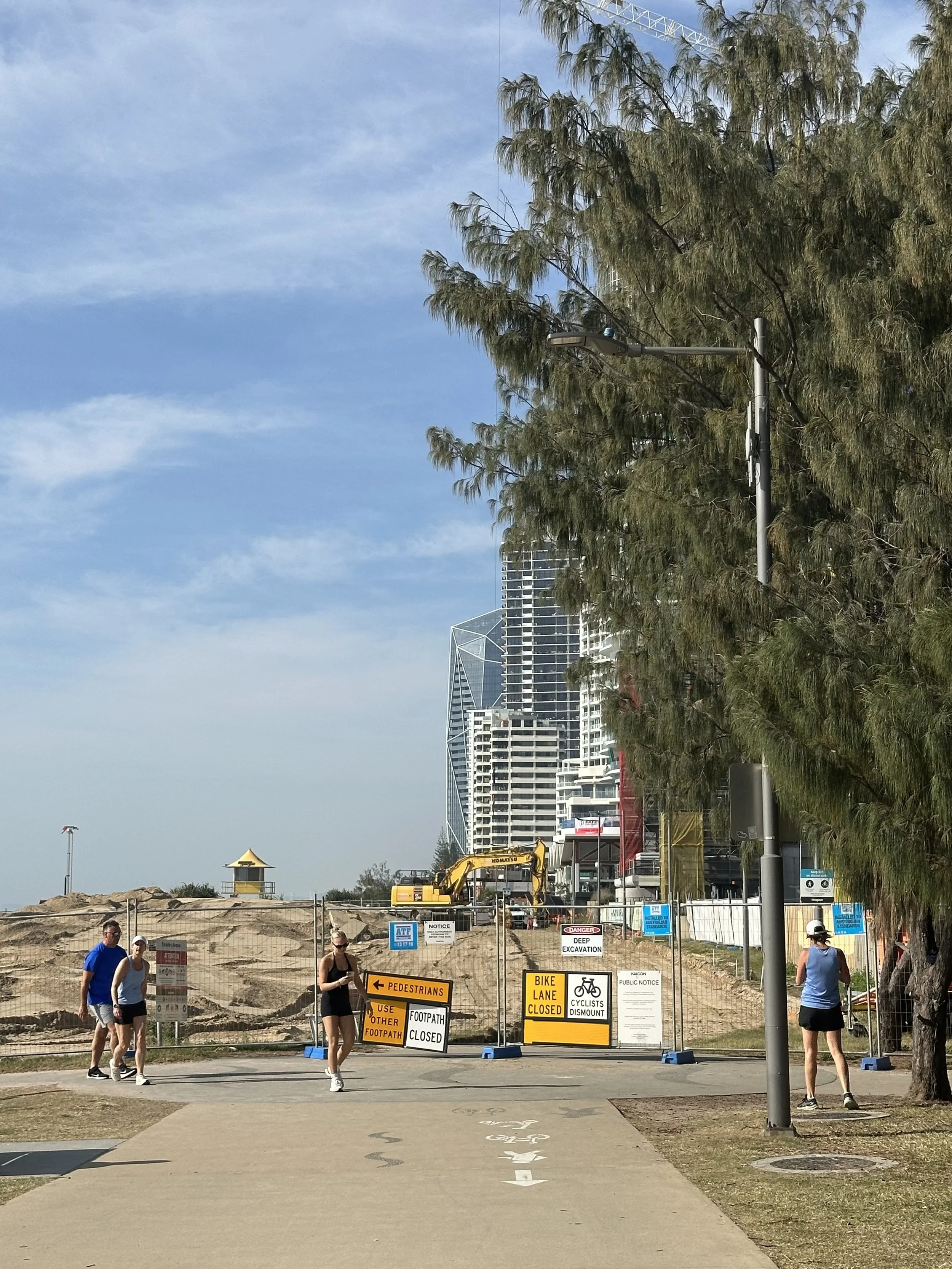
What about the A-line?
Much is made of the A-line, but its significance is sometimes misunderstood.
The A-line is a notional line reflecting the extent of significant erosion experienced along the Gold Coast during the cyclones of the 1960s and 1970s. It broadly corresponds with the alignment of buried foreshore rock walls constructed to protect houses and public infrastructure. It is not, in itself, a physical protective structure.
For private redevelopment, buildings must be set back behind the A-line and owners must provide certification of a buried foreshore rock wall constructed to comply with the council’s Foreshore Rock Wall policy.
It is not mandatory for public infrastructure on public land to be set landward of the A-line, or protected by a foreshore rock wall, but risk assessment applies.
In relation to the Oceanway path, where there is insufficient width between a private property boundary and the A-line, and where existing dunes are healthy, it is reasonable to consider whether it is appropriate for short sections of sacrificial path to cross the A-line. That is not reckless development. It is risk management: weighing public benefits against the likelihood and cost of damage and the potential need to repair or replace a section of path.
Dune stabilisation and care
The Gold Coast's own Management of Coastal Dune Areas policy provides guidance for planting and maintenance designed to support diverse dune ecosystems and stabilisation.
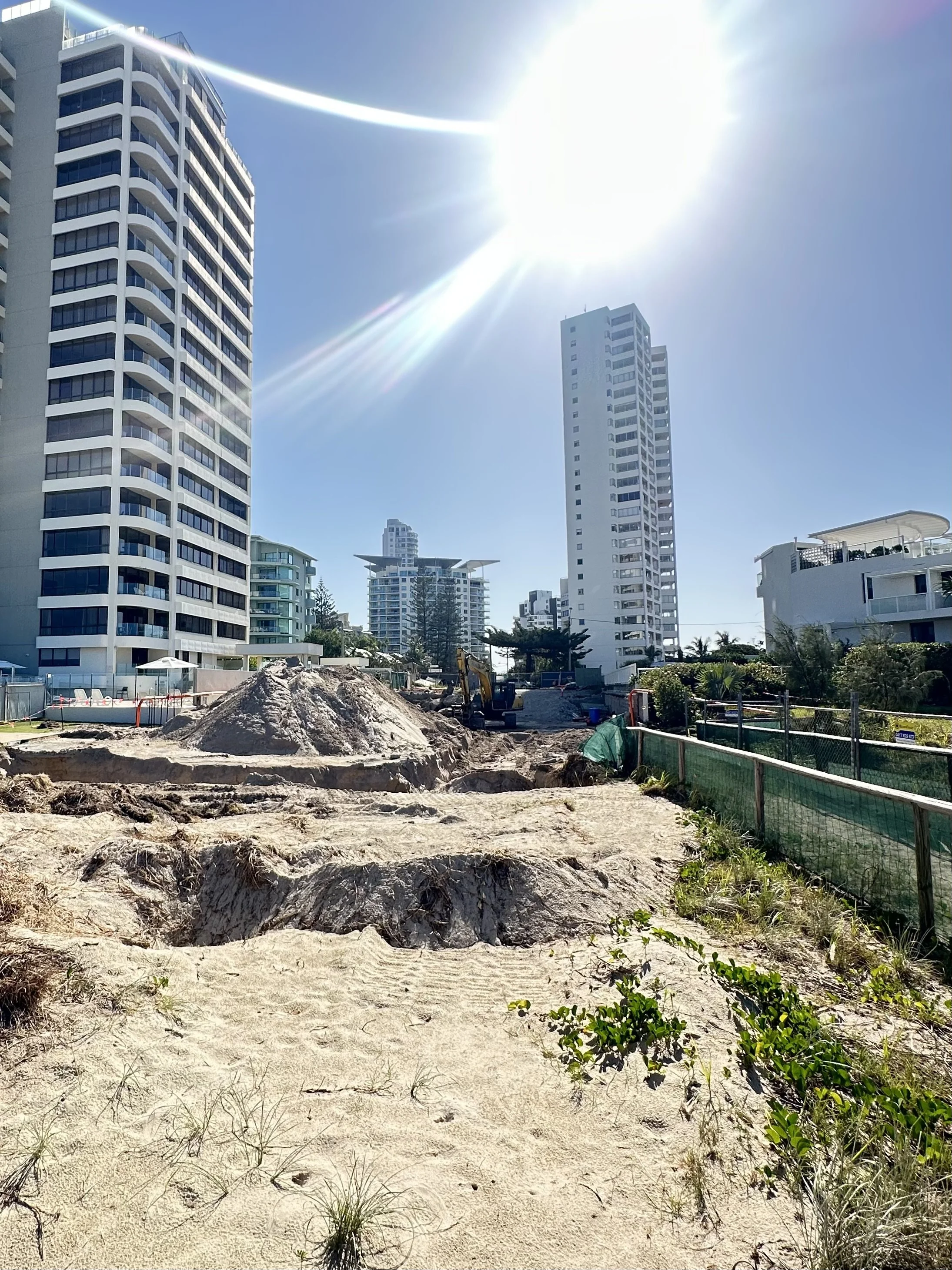
In many places along Mermaid Beach, the public land in front of beachfront properties is currently turfed, illegally. Such domestic grass contributes little to dune health or biodiversity. A properly designed Oceanway corridor, with native plant and grass species could really improve these dunal landscapes.
Council, community groups and individual landowners could contribute to dune health through planting and care of appropriate species.
Protective fencing, community education and event management practices could be employed to people to keep to designated paths and beach access tracks and reduce trampling of dune vegetation.
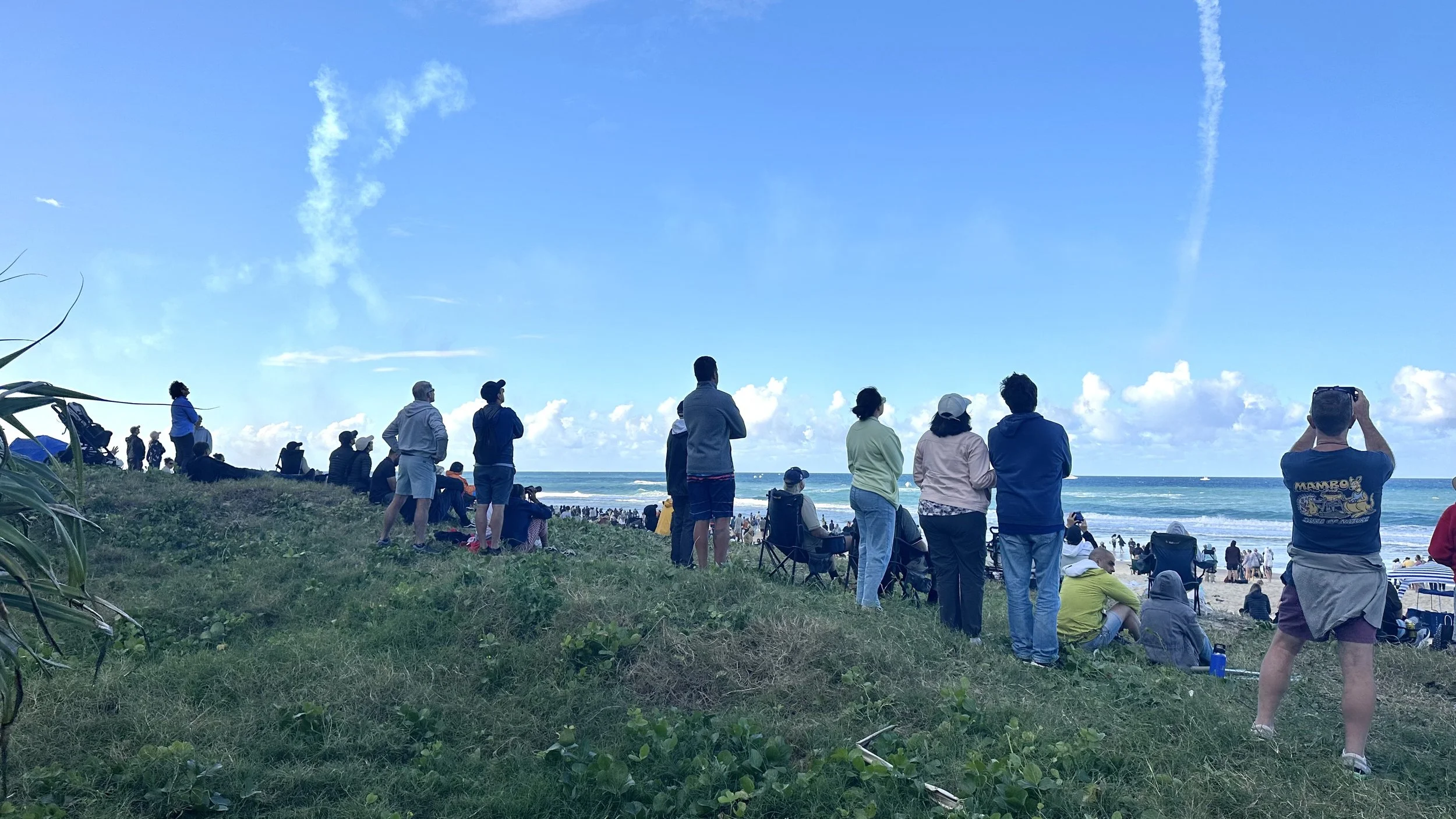
Pacific Airshow spectators trampling dunes, August 2026
What about nesting turtles?
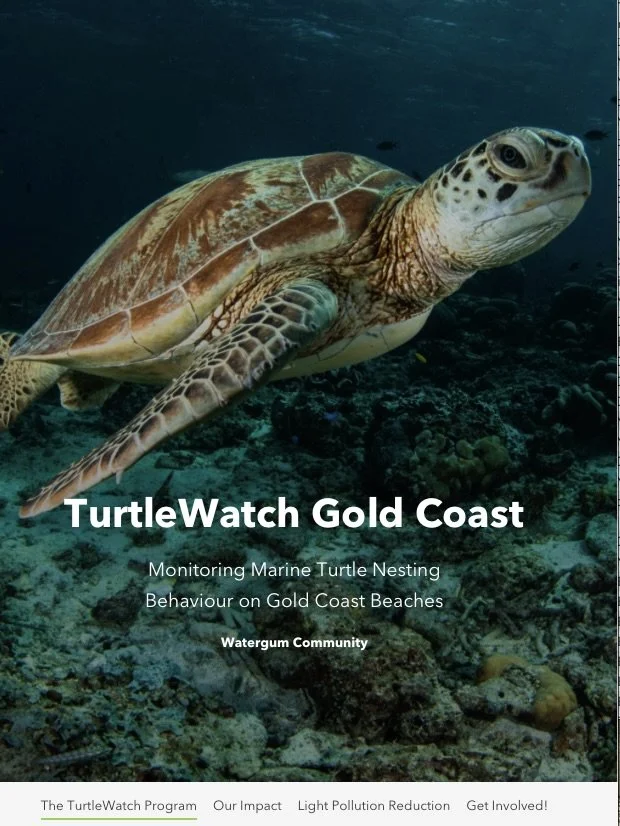
SEE THE LATEST REPORT https://arcg.is/1mW0Dn
Turtle nesting is another matter that deserves a fact-based response. Turtles have been nesting further south as sea temperatures rise and a TurtleWatch program has been operating for more than a decade. This involves volunteers who monitor nesting activity. Monitoring results have not recorded Mermaid Beach as a significant nesting location. That does not mean Mermaid Beach should not be managed to encourage wildlife. Quite the opposite.
The Oceanway should be designed to make the beachfront more wildlife-friendly, not less.
It is worth acknowledging that existing residential development poses substantial impacts. At night, light spills from beachfront homes onto the dunes, while domestic grass and other landscaping provide little ecological value.
A carefully designed public Oceanway corridor with sensitive lighting, native planting, appropriate fencing and vegetation management can help create better habitat while also stabilising the dunes.
THE COST QUESTION
The idea that a conventional Oceanway is an environmentally damaging and prohibitively expensive concrete structure is misleading. The conventional concrete path is simple, quick and cost-effective to construct. It also avoids many of the environmental and engineering challenges associated with a substantial raised boardwalk.
A raised boardwalk may appear more environmentally sensitive because it sits above the dunes. But large marine-grade piers require substantial foundations, extending deep into bedrock. If those structures are undermined during a major cyclone, exposed footings and piles can themselves become destructive objects within the dune system.
By contrast, a sacrificial concrete path is deliberately designed to fail in a more manageable way during extreme erosion.
We do not have access to Council's detailed engineering estimates, so any comparison should be treated as indicative rather than definitive. However, a preliminary assessment of a 2.9km section illustrates the potential scale of the difference:
3.5m sacrificial floating concrete path: ~ $1.5M
4.5m raised marine-grade boardwalk with piers locked 20m to bedrock:
~ $42M - $68M depending on engineering and foundation requirements
Therefore, the concrete path could be washed away and rebuilt 30+ times before reaching the capital cost of a single ‘cyclone-proof’ boardwalk.
Even allowing for significant additional expenditure on landscaping, lighting, seating and other amenities, the construction of a concrete beachfront path represents a remarkably efficient investment in public infrastructure.
Council's 2026/27 infrastructure and transport budget is approximately $543 million. The Oceanway therefore needs to be considered not simply as a cost, but as an investment in public safety, accessibility, recreation, tourism and the Gold Coast's long-term lifestyle infrastructure.
The appropriate question is not "How much does the path cost?" It is: "What public benefit will the Gold Coast receive for that investment?"
On that measure, the case deserves serious consideration.
THE PLANNING HISTORY MATTERS
There is also a compelling historical reason to favour the beachfront alignment.
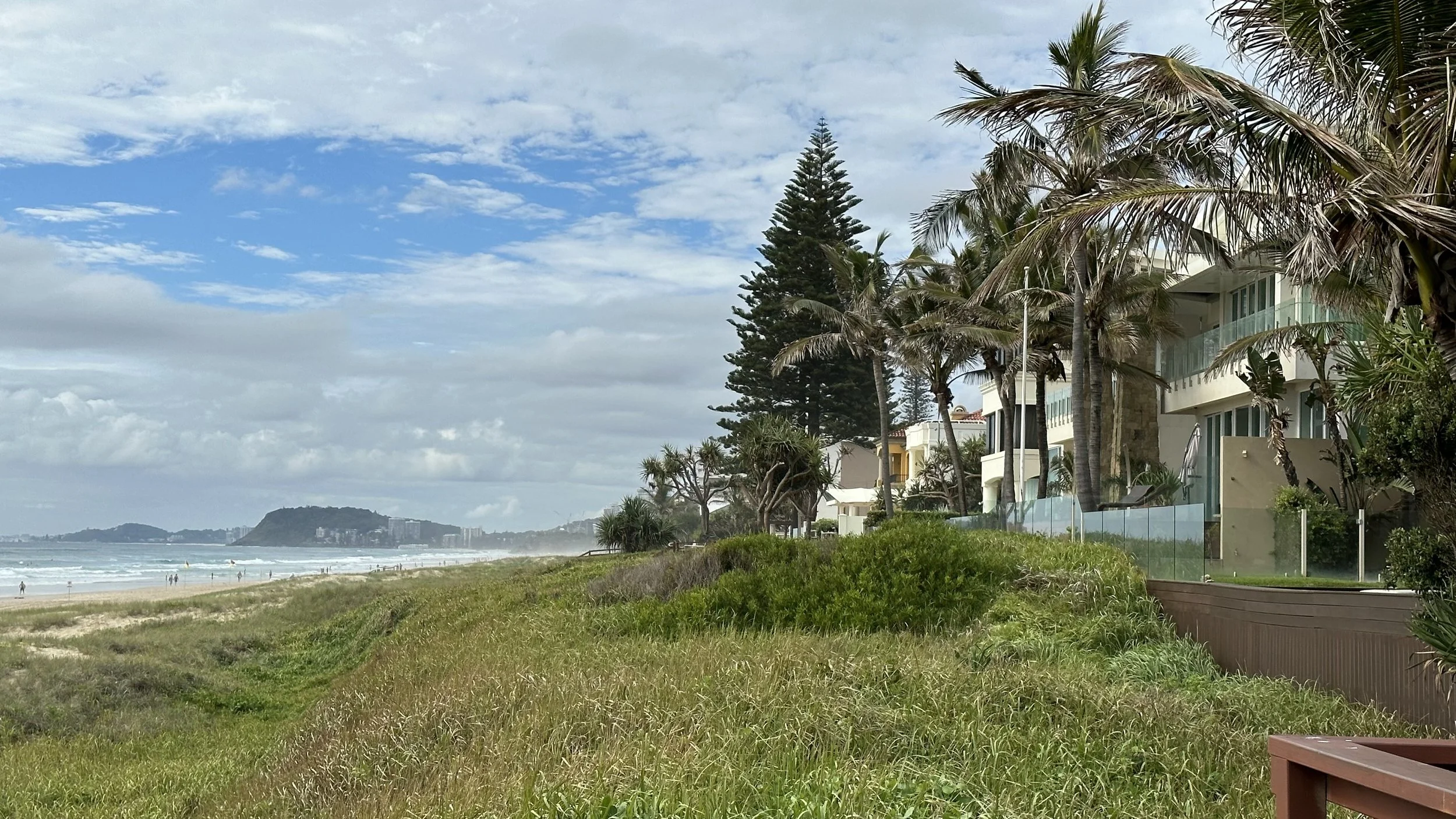
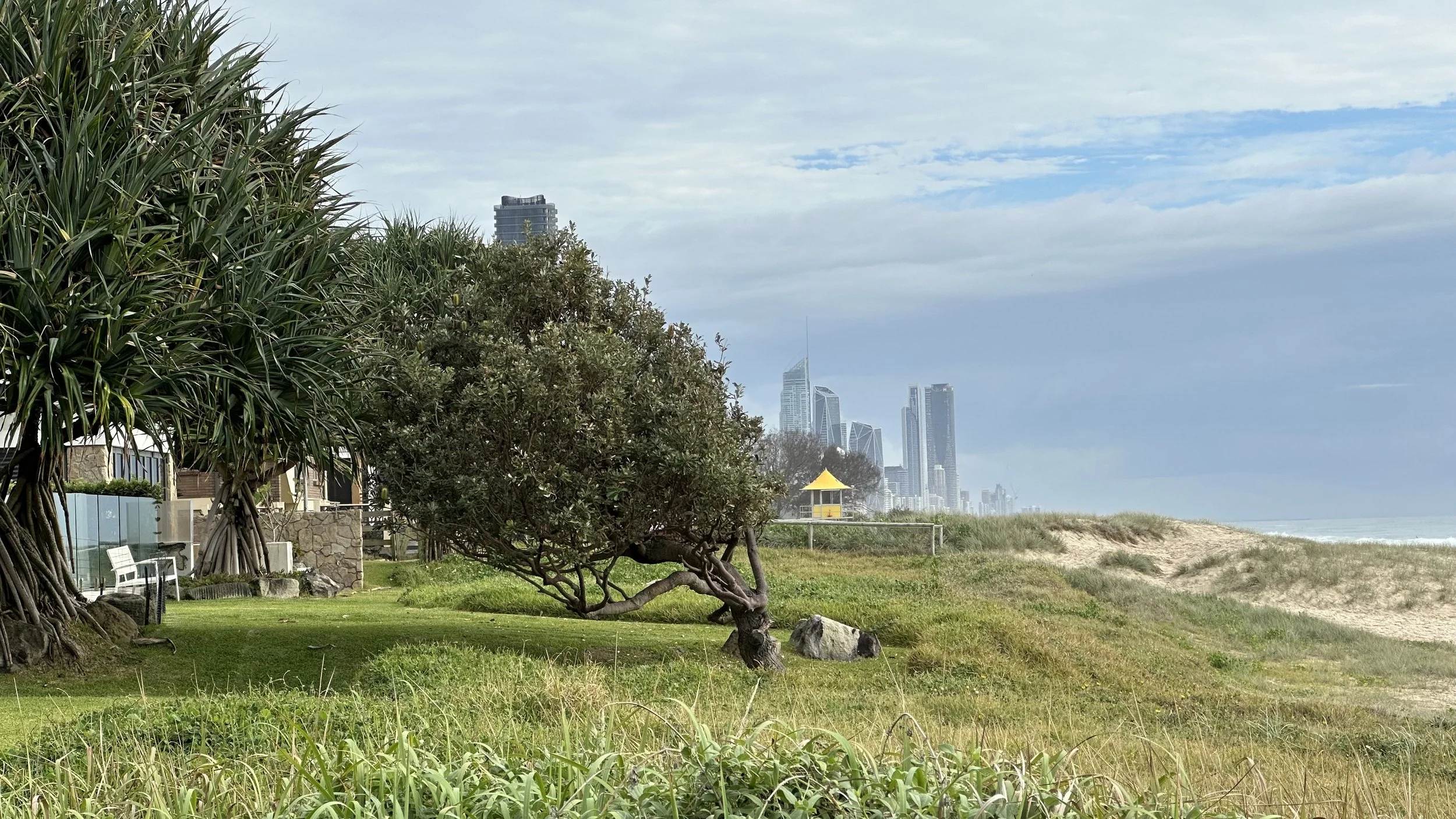
The original 1890s survey plan for the Mermaid Beach Estate envisaged an esplanade seaward of the residential lots — Los Angeles Esplanade — much like Broadbeach, Miami, Burleigh and Coolangatta where public esplanades and parks interface with the beach instead of private houses.
By the late 1940s and 1950s when allotments were sold and housing construction began, erosion had made development of that esplanade difficult. Hedges Avenue consequently became the principal north-south route and in subsequent preparation of the city’s first town planning schemes, a road-widening reservation of 1.5 metres was applied to properties on both sides of Hedges Avenue with a long-term objective of providing proper pedestrian pathways.
But in 1996, following representations from the Mermaid Residents Association, Council amended the planning scheme to remove the historical road-widening reservation, and this has left Hedges Avenue with a fundamental problem. There simply isn't enough road reserve to create a safe, continuous pedestrian path without major intervention.
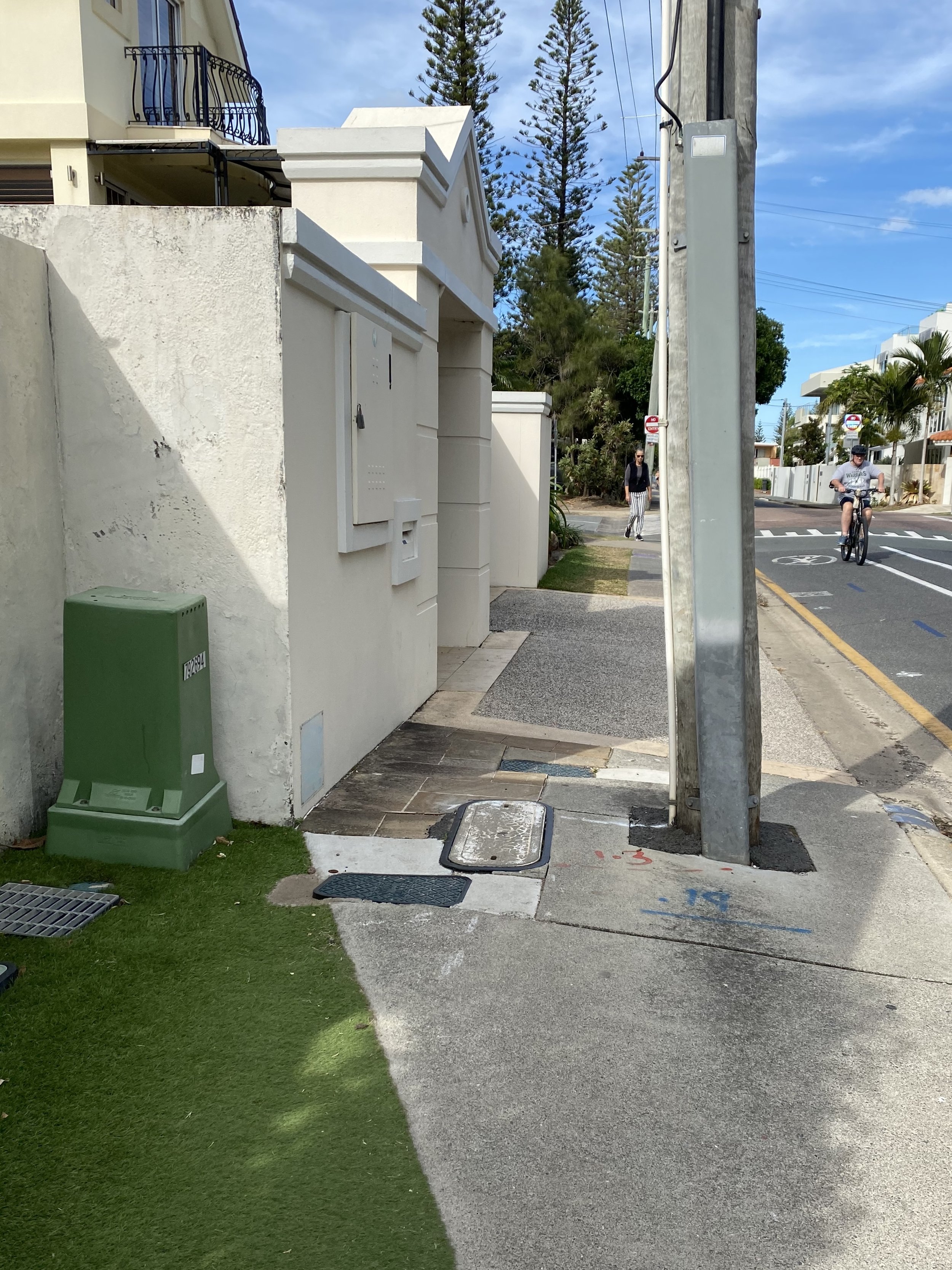
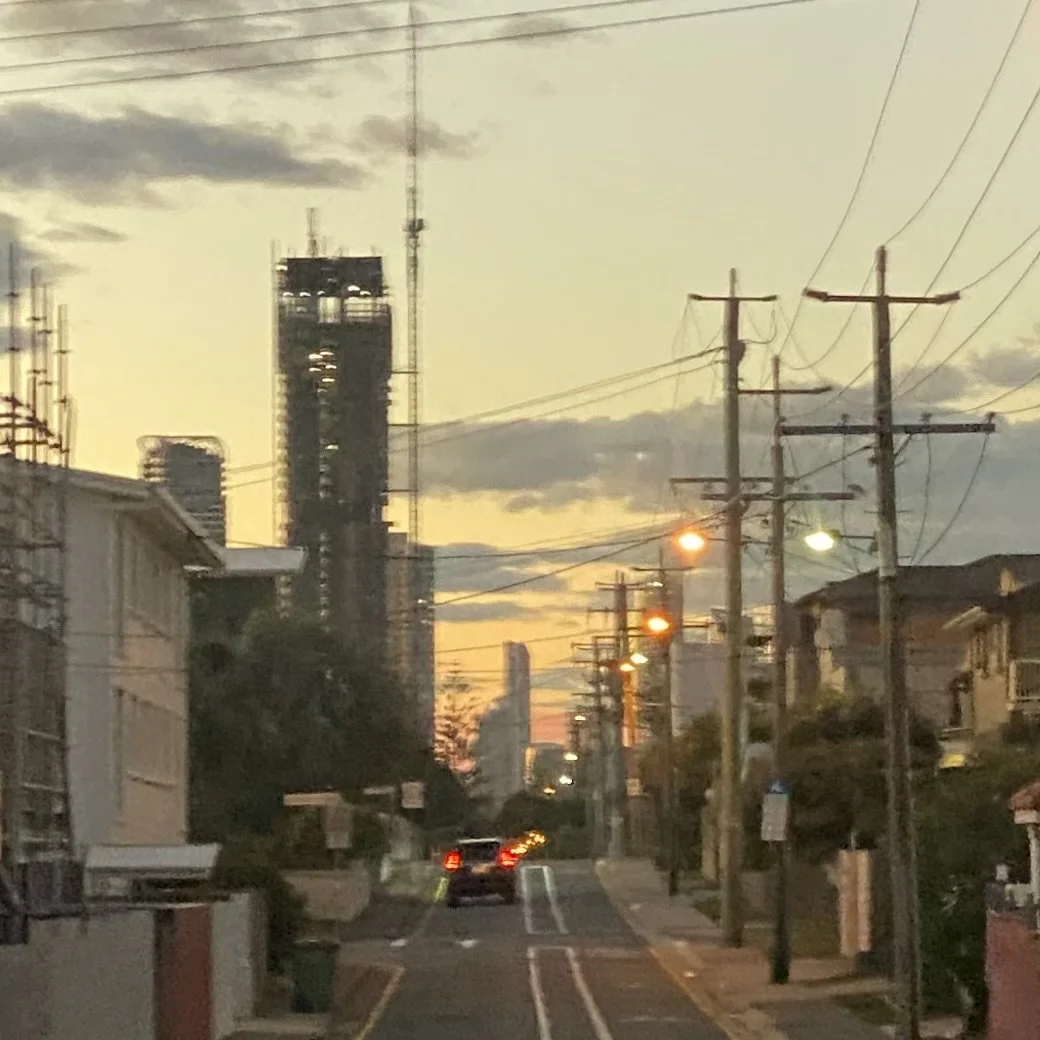
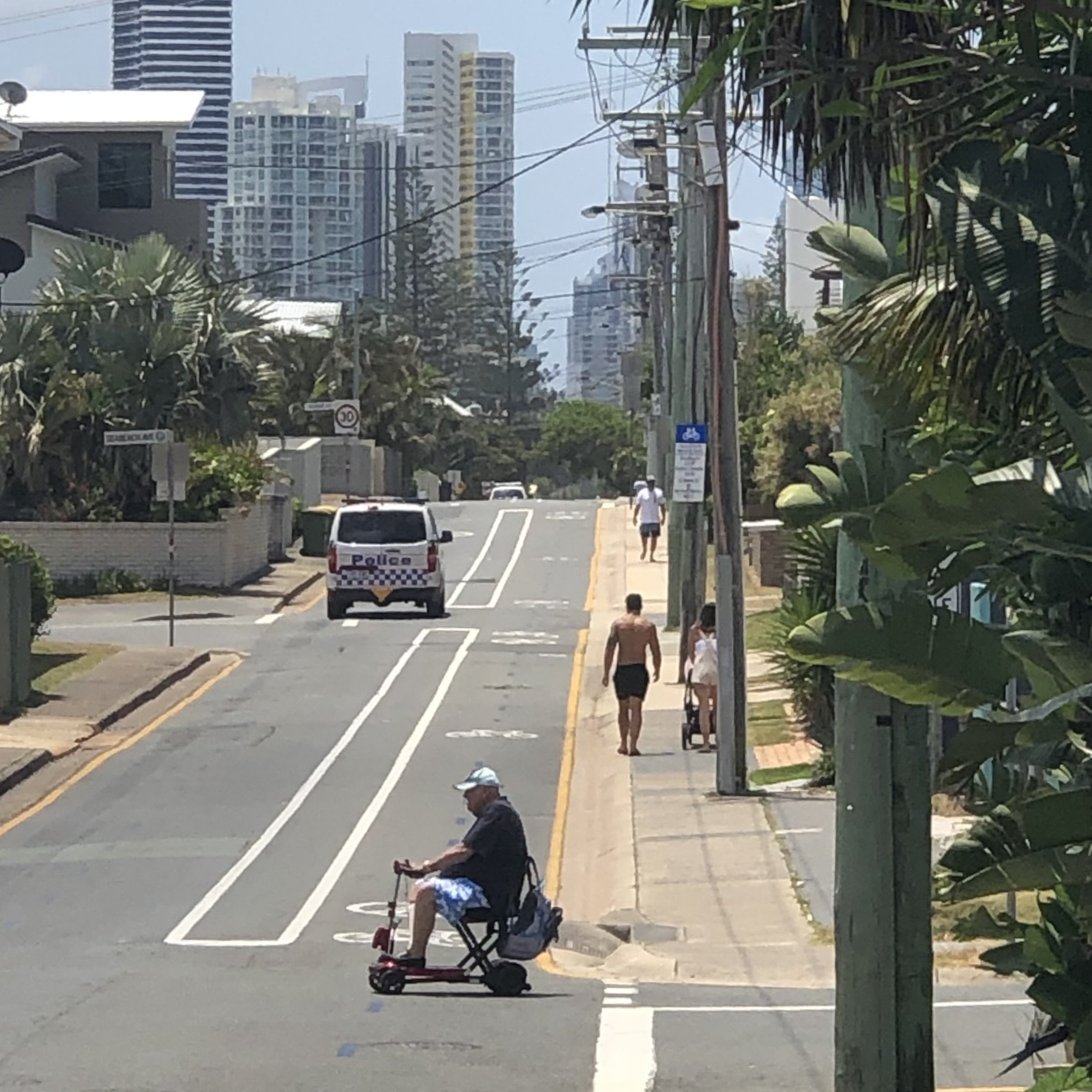
To remove poles and put powerlines underground would require substantial reconstruction of footpaths, driveway crossovers, road surfaces and street lighting. And undergrounding the power lines would not solve the biggest safety hazard caused by resident, trade and delivery vehicles continually intercepting pedestrian and cycle traffic, as they enter and exit private properties. This alone makes the option of designating Hedges and Albatross Avenues as the Mermaid Oceanway, difficult to justify.
THE BEACHFRONT OPTION HAS THE ADVANTAGES
The beachfront alignment offers something the Hedges/Albatross option cannot easily provide:
Safe, continuous and equitable access
At present, pedestrians are forced into an environment dominated by vehicles and private driveways. A beachfront Oceanway will create a safe, unobstructed route for pedestrians and people using wheelchairs, while providing genuine public access to the beachfront.
A simpler construction project
The path can be constructed largely without disrupting traffic, avoiding the extensive road, utility and driveway works that a Hedges Avenue route would require.
A better visitor experience
A continuous beachfront path would be an extraordinary addition to the Gold Coast's lifestyle and tourism infrastructure — connecting communities while allowing residents and visitors to experience our city's magnificent natural asset.
Better separation of different users
The Oceanway need not become another high-speed cycling corridor. It can prioritise pedestrians and people using wheelchairs, while faster cyclists, e-bikes and e-scooters continue to use the cycle infrastructure on Hedges Avenue. That creates a safer and more enjoyable experience for everyone.
A healthier, more connected city
A continuous beachfront path makes walking and active transport easier and more attractive. It may encourage more people to leave their cars at home for short trips.
THE MISSING LINK IS WORTH COMPLETING
The Gold Coast has already demonstrated what a continuous Oceanway can do.
Sections that once seemed unnecessary or difficult to build have become valued pieces of public infrastructure. When the missing links are completed, we are likely to look back and wonder why it took so long.
The Mermaid Beach section should not be viewed simply as a choice between the interests of beachfront residents and the wider community.
With good design, sensitive environmental management and appropriate consultation, we can protect residential amenity, strengthen the dunes, accommodate wildlife and provide the public with safe, continuous access to the beachfront.
That is a better outcome for everyone.
The Oceanway is already an established part of the Gold Coast's identity. The remaining question is whether Mermaid Beach should continue to be the missing link.
Friends of the Oceanway believe it should not.
Let's complete the Oceanway — and make Mermaid Beach the next link.